
For an activewear packing enquiry, identify the exact garments and ask for a layout showing their orientation, fold locations and contact surfaces. Mark where one garment, a label or a proposed packing material touches another surface. Retain an identified packed-sample record before approving the arrangement. A styled outfit photograph does not establish a packing method or a protective result.
Identify the garments before drawing a packing proposal
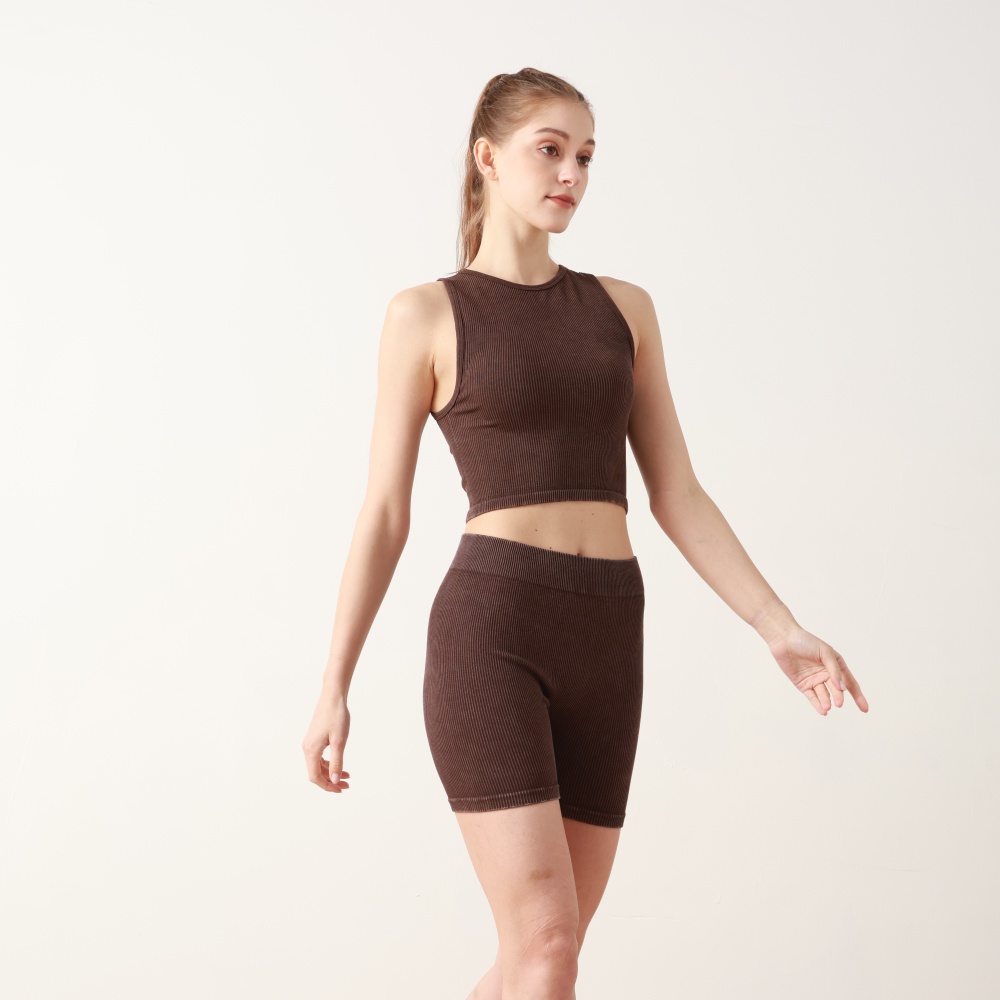
Zhiyin lists ZY001 in its High Waist Leggings & Biker Shorts Sets range. Its selected catalogue photographs show a brown sleeveless top with shorts. These images help a buyer name the garment areas being discussed, but they contain no packed sample. Ask the supplier to confirm the exact offered components before requesting an arrangement for those components.
Buyers comparing wholesale high waist leggings and biker shorts sets often receive packing descriptions such as individually packed or packed together. Those phrases leave the physical arrangement open. The useful next document is a layout tied to the selected item and sample, showing what is folded, what faces outward and what touches what. Keep the previously agreed component identity with that layout rather than reconstructing it from a styled photograph.
Name the face, orientation and fold location
Describe the garment area using an identified front, rear, inner or outer reference. Ask the supplier to mark the proposed fold line on an actual garment view or sketch. A phrase such as fold in half does not explain whether the top is folded across its body, whether the shorts are turned, or which face is exposed after the operation.
Record the sequence only as specifically as the supplier proposes it. If one garment sits inside another or both are placed side by side, ask for that relationship to be shown. Do not impose an unsupported universal fold method or assume that all colourways have been reviewed. A changed garment detail may require the supplier to revisit the arrangement rather than reuse an earlier photograph without explanation.
Use a contact map with separate observation fields
The worksheet does not establish that a particular insert, tissue, bag or other material is supplied. Ask for its proposed identity and purpose first. A buyer can request a material declaration or other applicable evidence where needed, but should not infer composition, chemical compatibility or a protective effect from a transparent wrapper or a photograph of a neatly folded garment.
Map field | Supplier proposal | Sample record
Garment identity | Exact item, component and version | Identify the actual garment reviewed
Orientation | Marked face and direction after folding | Record the arrangement actually seen
Contact area | Garment-to-garment or material-to-garment location | Note the specific surfaces in contact
Added materials | Proposed label, insert or wrapping identity | Record which items were actually present
Decision | Proposed arrangement and open questions | Approved, change requested or unresolved
Keep a packed-sample observation distinct from a test result
Ask for pictures or a record of the actual proposed packed sample, identified by item and version. The record should show enough of the layout to understand the named contact areas. A closed outer pack alone may hide the relevant arrangement; request an open view when that is needed to understand the proposal. Leave an unseen area unconfirmed instead of drawing it yourself.
A visual review can record appearance and placement under its actual conditions. It does not independently establish resistance to pressure, rubbing, transport, moisture or colour transfer. If such a requirement matters, define a separate evidence request with the product version and evaluation conditions identified. Do not convert a clean unpacking photograph into a claim that the arrangement has passed an unperformed test.
Attach the accepted layout to the receiving instruction
Once the proposed arrangement has been reviewed, save the dated layout and its sample reference with the order record. The receiving instruction can then point to that specific arrangement. Keep any unresolved question visible, including whether a requested loose item is included or only suggested. A drawing approved for placement does not itself confirm commercial contents or availability.
When a supplier proposes a packing change, compare the affected fold, orientation or contact area against the accepted reference. Ask which garments and versions the change covers. Keep the earlier reference and the proposed replacement together until a decision is recorded. This allows purchasing and receiving to understand the physical change without treating a new outer-pack picture as a complete explanation.
A practical enquiry checklist
Send the contact-map request through the product or contact link below. This enquiry gives the supplier a specific document to return. It does not promise a fixed pack ratio, a transport result or a protective property, and it does not replace the separate component-size mapping needed for the selling unit.
• Name ZY001 and the supplier-confirmed components to which the packing proposal applies.
• Request a marked layout with garment orientation, fold locations and all relevant contact surfaces.
• Identify separately proposed labels, inserts or wrapping; request evidence rather than assuming their composition or effect.
• Retain the actual packed-sample reference and dated decision, with any performance requirement handled separately.
Frequently asked questions
Does the model photograph show how ZY001 is packed?
No. It identifies the garment presentation. Ask the supplier for the proposed packing layout and an identified packed-sample record.
Does approval of a fold position establish protection?
No. Placement and a protective performance result are different decisions. Any required performance claim needs its own applicable evidence.
Can a proposed insert be treated as included supply?
No. Ask the supplier to acknowledge its identity and supply status. A proposed packing material is not automatically part of the commercial offer.
How is this different from mapping the top and shorts sizes?
The size mapping identifies the supplied garment pairing. The contact map records the physical arrangement and surfaces touching during the proposed packing method.
Product and contact references
https://zyunderwear.com/product/zy001/
https://zyunderwear.com/products/?product_filter=high-waist-leggings-biker-shorts-sets
https://zyunderwear.com/contact/
https://zyunderwear.com/blog/